

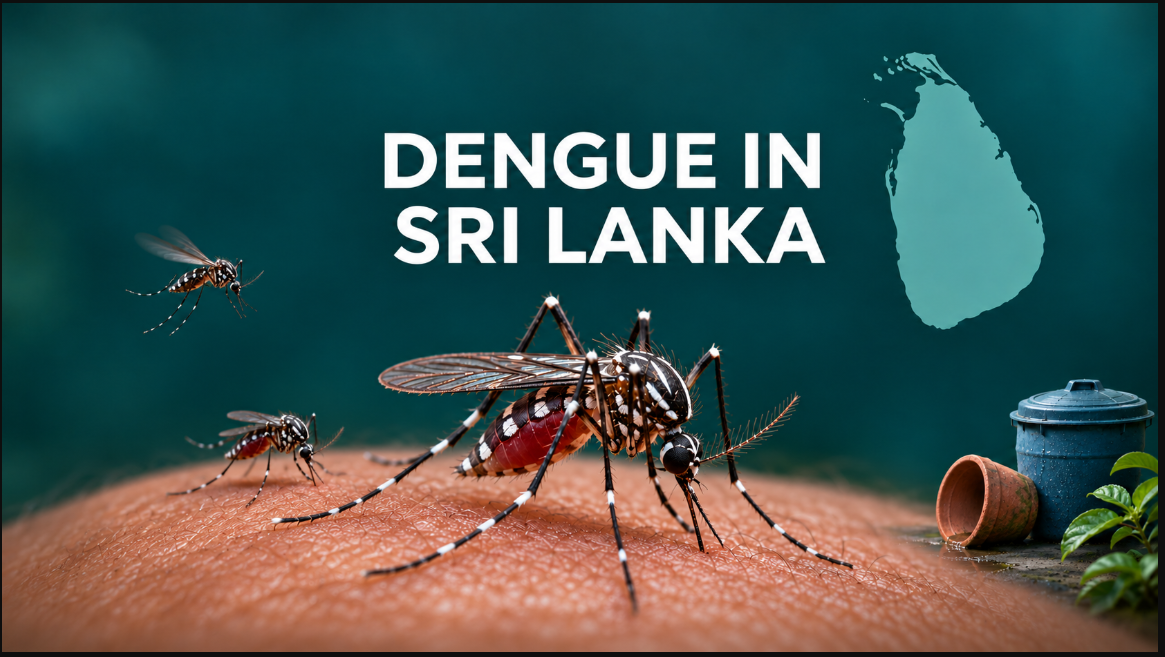
Sri Lanka has recorded more than 108,000 dengue cases and 81 deaths so far in 2026, highlighting the continuing need for mosquito control and early medical attention. Figures published by the Daily Mirror’s dengue tracker, citing National Dengue Control Unit data, showed 108,949 cases as of November 12.
The district figures supplied for this report include:
| District | Province | Reported cases |
|---|---|---|
| Colombo | Western | 21,017 |
| Kandy | Central | 8,975 |
| Kalutara | Western | 6,757 |
| Matara | Southern | 6,509 |
| Galle | Southern | 5,996 |
| Ratnapura | Sabaragamuwa | 5,485 |
These selected districts do not represent the full national total.
Dengue spreads through the bites of infected mosquitoes. Early diagnosis and appropriate medical care can significantly reduce the risk of death from severe dengue, according to the World Health Organization (WHO).
Symptoms and warning signs
Common symptoms include sudden high fever, severe headache, pain behind the eyes, muscle and joint pain, nausea, vomiting and a rash.
Warning signs include severe stomach pain, persistent vomiting, bleeding from the nose or gums, blood in vomit or stools, rapid breathing, unusual weakness, and pale or cold skin. Anyone experiencing these symptoms should seek hospital care immediately. Severe dengue can develop even after the fever subsides, so a falling temperature should not be taken as proof of recovery.
What to do if dengue is suspected
- Seek medical advice promptly and follow instructions on blood tests and follow-up visits.
- Rest and drink adequate fluids. Oral rehydration solution, rice kanji and other suitable drinks can help maintain hydration.
- Use paracetamol for fever only at the recommended dose.
- Rest under a mosquito net to help prevent mosquitoes from biting the patient and spreading the infection.
What to avoid
Do not take aspirin, ibuprofen, diclofenac or mefenamic acid for suspected dengue, as these medicines can increase bleeding risk. Do not self-medicate with steroids. Avoid strenuous physical activity and do not delay treatment when warning signs appear.
How to prevent dengue
Households and workplaces should regularly remove stagnant water from containers, discarded tyres, flowerpot trays and other potential breeding sites. Water-storage containers should be covered, while gutters and surrounding premises should be kept clean.
Protection from mosquito bites is also essential, particularly during the daytime. Use mosquito repellent as directed, wear clothing that covers the arms and legs, and use window screens or mosquito nets when resting.