







Sri Lanka has recorded more than 108,000 dengue cases and 81 deaths so far in 2026, highlighting the continuing need for mosquito control and early medical attention. Figures published by the Daily Mirror’s dengue tracker, citing National Dengue Control Unit data, showed 108,949 cases as of November 12.
The district figures supplied for this report include:
| District | Province | Reported cases |
|---|---|---|
| Colombo | Western | 21,017 |
| Kandy | Central | 8,975 |
| Kalutara | Western | 6,757 |
| Matara | Southern | 6,509 |
| Galle | Southern | 5,996 |
| Ratnapura | Sabaragamuwa | 5,485 |
These selected districts do not represent the full national total.
Dengue spreads through the bites of infected mosquitoes. Early diagnosis and appropriate medical care can significantly reduce the risk of death from severe dengue, according to the World Health Organization (WHO).
Symptoms and warning signs
Common symptoms include sudden high fever, severe headache, pain behind the eyes, muscle and joint pain, nausea, vomiting and a rash.
Warning signs include severe stomach pain, persistent vomiting, bleeding from the nose or gums, blood in vomit or stools, rapid breathing, unusual weakness, and pale or cold skin. Anyone experiencing these symptoms should seek hospital care immediately. Severe dengue can develop even after the fever subsides, so a falling temperature should not be taken as proof of recovery.
What to do if dengue is suspected
- Seek medical advice promptly and follow instructions on blood tests and follow-up visits.
- Rest and drink adequate fluids. Oral rehydration solution, rice kanji and other suitable drinks can help maintain hydration.
- Use paracetamol for fever only at the recommended dose.
- Rest under a mosquito net to help prevent mosquitoes from biting the patient and spreading the infection.
What to avoid
Do not take aspirin, ibuprofen, diclofenac or mefenamic acid for suspected dengue, as these medicines can increase bleeding risk. Do not self-medicate with steroids. Avoid strenuous physical activity and do not delay treatment when warning signs appear.
How to prevent dengue
Households and workplaces should regularly remove stagnant water from containers, discarded tyres, flowerpot trays and other potential breeding sites. Water-storage containers should be covered, while gutters and surrounding premises should be kept clean.
Protection from mosquito bites is also essential, particularly during the daytime. Use mosquito repellent as directed, wear clothing that covers the arms and legs, and use window screens or mosquito nets when resting.
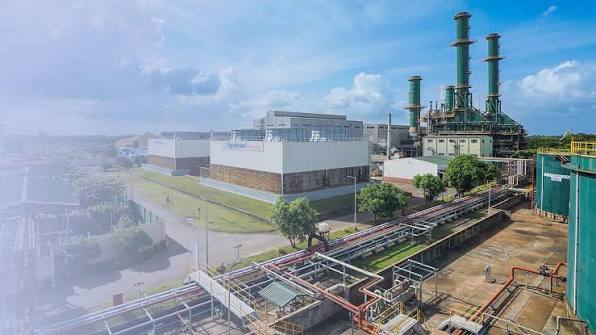
COLOMBO, Sri Lanka, November 15, 2026 – Sri Lankan power company Lakdhanavi Limited has secured a US$75 million contract to build a 57-megawatt natural gas-fired power plant in India’s Andaman Islands, marking a significant expansion of Sri Lankan engineering expertise into one of Asia’s largest energy markets.
The project, valued at approximately 25 billion Sri Lankan rupees, will be developed at Hope Town near Port Blair in the Andaman and Nicobar Islands, an Indian territory in the Bay of Bengal.
The contract was awarded by NTPC Vidyut Vyapar Nigam Limited (NVVN), a subsidiary of India’s state-owned energy company NTPC Limited, following an international competitive bidding process.
Lakdhanavi, part of Sri Lanka’s LTL Group, emerged as the lowest-priced bidder, securing its first power plant Engineering, Procurement and Construction (EPC) contract in India.
New Power Plant to Strengthen Energy Security in India’s Andaman Islands
The 57 MW natural gas-based power plant is expected to strengthen electricity infrastructure and support long-term energy security in the Andaman Islands.
The project will also support the development of liquefied natural gas (LNG) infrastructure, creating opportunities for future economic growth in the island territory.
Under the agreement, Lakdhanavi’s engineering team will execute the project, while Finland-based technology company Wärtsilä will supply the power-generating equipment.
The contract was formally signed on September 21, 2026, at NTPC’s office complex in Noida, near New Delhi.
Sri Lankan Engineering Expands into India’s Energy Market
The agreement represents an important milestone for Sri Lanka’s engineering and energy industries, demonstrating the ability of companies from smaller South Asian economies to compete for major infrastructure contracts in larger international markets.
Lakdhanavi has previously participated in power projects in Bangladesh, Nepal and the Maldives, building regional experience in power generation, engineering and maintenance services.
Its entry into India’s power infrastructure market could open further opportunities for Sri Lankan engineering companies seeking international projects.
Eng. Nuhuman Marikkar, Chief Executive Officer of Lakdhanavi Limited and LTL Holdings Limited, described the contract as a major achievement for the company and Sri Lankan engineering.
He said the award demonstrated the company’s technical capabilities and its ability to deliver complex power infrastructure projects internationally.
India–Sri Lanka Economic Cooperation Expands in Both Directions
The project highlights an emerging dimension of economic cooperation between India and Sri Lanka.
India has traditionally played a major role in Sri Lanka’s infrastructure development through investments, financial assistance and bilateral partnerships.
However, Lakdhanavi’s latest contract demonstrates how Sri Lankan companies can also contribute to infrastructure development in India.
Sri Lanka’s Energy Minister Anura Karunathilake welcomed the achievement, highlighting the importance of Sri Lankan businesses competing successfully in international markets.
The project also brings together engineering expertise from Sri Lanka, energy infrastructure investment in India and power-generation technology from Finland.
Key Facts About the $75 Million India Power Project
| Detail | Information |
|---|---|
| Contract value | US$75 million |
| Power plant capacity | 57 MW |
| Location | Hope Town, Port Blair, India |
| Technology | Natural gas-fired generation |
| Main contractor | Lakdhanavi Limited, Sri Lanka |
| Client | NTPC Vidyut Vyapar Nigam Limited, India |
| Equipment supplier | Wärtsilä, Finland |
| Contract signed | September 21, 2026 |
The project marks another step in Lakdhanavi’s international expansion and highlights growing opportunities for cross-border engineering and energy cooperation in South Asia.

Colombo, Sri Lanka – ColomboPages.com– November 15, 2026: Sri Lanka is moving forward with plans to establish a Digital Transformation Academy for the public sector, with support from the Asian Development Bank (ADB), to strengthen digital skills among government employees and accelerate the country’s digital government initiatives.
GovTech Sri Lanka, operating under the Ministry of Digital Economy, will lead the initiative, while international strategy consultancy MTI Consulting has been selected to develop the Academy’s strategy, institutional framework, business plan and curriculum.
MTI Consulting was appointed following a competitive national tender supported by the ADB.
What Is Sri Lanka’s Digital Transformation Academy?
The proposed Academy for Digital Transformation of the Public Sector will serve as a national platform to develop digital skills and practical capabilities among Sri Lankan government employees.
Its primary objective is to help public institutions adopt modern technologies, improve public service delivery and support the implementation of Digital Public Infrastructure (DPI).
The Academy is expected to provide structured training and professional development opportunities to strengthen the government’s ability to deliver efficient, accessible and technology-driven public services.
GovTech Sri Lanka to Lead Digital Skills Development
Dr. Hans Wijayasuriya, Chief Advisor to the President on Digital Economy and Chairman of GovTech Sri Lanka, said the Academy would provide a structured and scalable approach to building digital capabilities across government institutions.
He emphasized the importance of preparing public-sector employees to effectively use emerging digital infrastructure and services.
The initiative forms part of Sri Lanka’s broader digital transformation efforts, which aim to modernize government operations and improve how citizens access public services.
MTI Consulting to Develop Academy Strategy and Curriculum
MTI Consulting has been tasked with developing the Academy’s strategic direction, institutional structure, operational business plan and training curriculum.
Hilmy Cader, CEO of MTI Consulting and Project Mentor, highlighted the importance of practical skills rather than relying solely on conventional training methods.
According to Cader, successful digital transformation requires government institutions to develop the capabilities needed to turn digital strategies and technologies into sustainable results.
MTI Consulting has completed more than 760 consulting projects across 56 countries during its 29 years of operations.
How Will the Digital Transformation Academy Benefit Sri Lanka?
The proposed Academy is expected to support Sri Lanka’s digital economy and public-sector modernization by:
- Strengthening digital literacy and technical capabilities among government employees.
- Supporting the adoption of Digital Public Infrastructure (DPI).
- Improving the efficiency and accessibility of government services.
- Helping public institutions implement digital transformation strategies.
- Building long-term institutional capacity for technology-driven public administration.
The Academy is intended to strengthen the workforce capabilities needed to support Sri Lanka’s ongoing digital government reforms.
Frequently Asked Questions
What is Sri Lanka’s Digital Transformation Academy?
It is a proposed national training and capacity-building platform designed to improve digital skills among government employees and support digital transformation across Sri Lanka’s public sector.
Who is establishing the Digital Transformation Academy?
GovTech Sri Lanka, under the Ministry of Digital Economy, is leading the initiative with support from the Asian Development Bank.
What is MTI Consulting’s role?
MTI Consulting has been appointed to develop the Academy’s strategy, institutional framework, business plan and curriculum.
Who will benefit from the Academy?
Sri Lankan government employees and public institutions are expected to benefit directly, while citizens may benefit indirectly through improved digital government services.
When will the Academy open?
An official launch date has not yet been announced in the information released about the project.
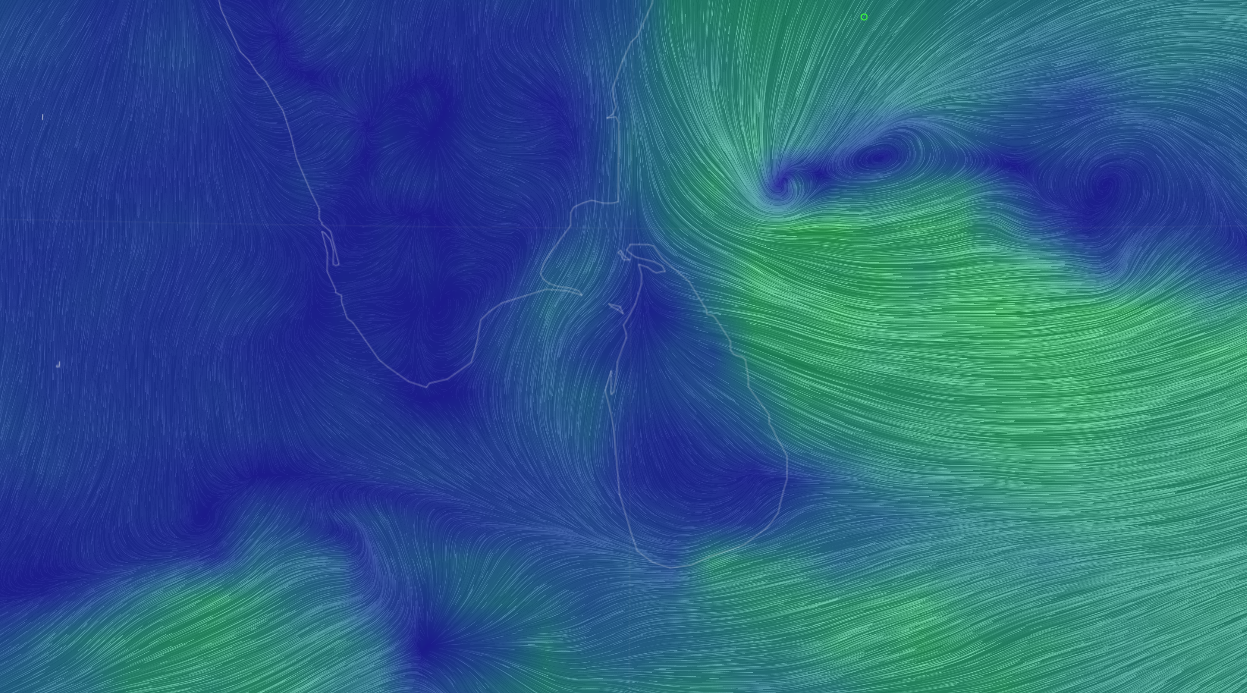
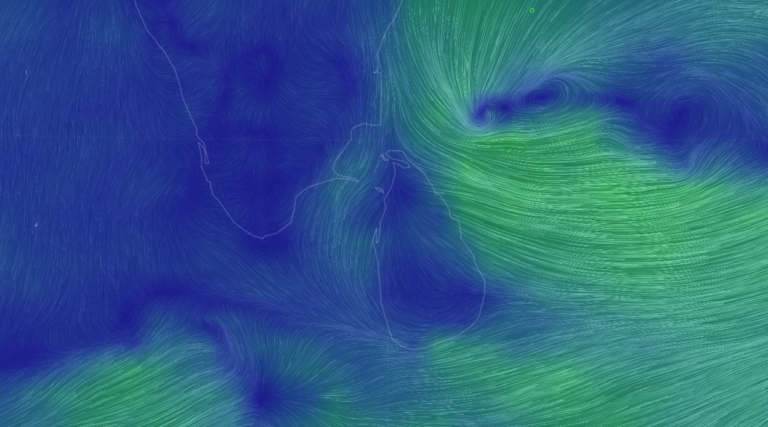
COLOMBO, Sri Lanka – ColomboPages.com – November 15, 2026: A depression over the Bay of Bengal is expected to develop into a cyclonic storm, potentially named Cyclone Akvan, on November 16 and strengthen further in the following days, according to the India Meteorological Department (IMD).
No direct cyclone impact is currently expected in Sri Lanka, as the developing storm is moving north-northwestwards, away from the island. However, cloudy skies, rainfall, thunderstorms and temporary strong winds are forecast across several parts of Sri Lanka, while fishing and naval communities have been warned about dangerous sea conditions.
The IMD confirmed that the depression was centred over the southeast and adjoining southwest Bay of Bengal at 5:30 a.m. Indian Standard Time on November 15, near latitude 9.0°N and longitude 86.9°E.
The system was approximately 860 kilometres east-southeast of Chennai, India, and 1,040 kilometres south-southeast of Visakhapatnam.
Will Cyclone Akvan Affect Sri Lanka?
Cyclone Akvan is not currently forecast to directly strike Sri Lanka. The developing weather system is moving away from the island’s eastern coastline towards the central Bay of Bengal.
Nevertheless, Sri Lanka’s Department of Meteorology has warned that the system will influence weather conditions across the country.
According to the department’s November 15 forecast, the low-pressure system was located approximately 600 kilometres east of Trincomalee before moving northwestwards.
Although a direct cyclone strike is not expected under the current forecast, residents should remain alert to changing weather conditions, particularly during thunderstorms.
Sri Lanka Weather Forecast for November 15
The Department of Meteorology has forecast cloudy skies across Sri Lanka, with rainfall expected in several provinces and districts.
- Northern, North-central and Eastern provinces: Showers at times throughout the day.
- Western and North-western provinces: Several spells of showers.
- Galle and Matara districts: Periodic rainfall.
- Other parts of Sri Lanka: Possible showers or thunderstorms during the evening or night.
Temporary strong winds and lightning may occur during thunderstorms.
Residents in Colombo and other parts of the Western Province can expect cloudy conditions with several spells of rain.
Sri Lanka Issues Marine Warnings for Fishermen
Sri Lanka’s Department of Meteorology has issued warnings for fishing and naval communities operating in parts of the Bay of Bengal and waters off the island’s eastern coastline.
The affected areas include deep-sea waters between latitudes 5°N and 15°N and longitudes 80°E and 90°E.
Warnings also cover coastal waters extending from Kankasanthurai in northern Sri Lanka to Hambantota in the south, via Trincomalee and Pottuvil.
Fishing vessels have been advised not to enter the affected sea areas until further notice. Those already operating in dangerous waters have been urged to move to safer locations.
Maritime communities should closely monitor updated weather forecasts and official marine advisories.
When Will Cyclone Akvan Form?
According to the India Meteorological Department’s November 15 forecast, the developing depression is expected to strengthen considerably over the next several days.
| Date | Forecast development |
|---|---|
| November 15 | Depression over the Bay of Bengal |
| November 16 | Expected to become a cyclonic storm |
| November 17 | Expected to become a severe cyclonic storm |
| November 18–19 | Further intensification possible |
The IMD’s extended forecast indicates that the system could reach very severe cyclonic storm intensity by November 19.
The name Akvan remains conditional until the system reaches cyclonic storm intensity and the name is officially assigned.
Where Is Cyclone Akvan Expected to Make Landfall?
Preliminary weather model projections suggest that the developing cyclone could approach India’s Andhra Pradesh coast around November 20.
Some ECMWF model scenarios indicate a possible landfall between Nizampatnam and Machilipatnam.
However, the exact landfall location, timing and intensity remain uncertain. These projections should not be treated as an official landfall forecast.
India’s eastern coastal states, including Andhra Pradesh, are expected to closely monitor the storm’s development as it moves across the Bay of Bengal.
Frequently Asked Questions About Cyclone Akvan
Is Cyclone Akvan coming to Sri Lanka?
No direct impact is currently expected. The developing storm is forecast to move north-northwestwards, away from Sri Lanka. However, rain, thunderstorms and temporary strong winds are possible.
Has Cyclone Akvan formed?
As of the morning of November 15, 2026, the weather system was classified as a depression. It is forecast to develop into a cyclonic storm on November 16.
Will Colombo experience rain from Cyclone Akvan?
Yes. Several spells of rain are forecast for Colombo and other parts of the Western Province on November 15, according to Sri Lanka’s Department of Meteorology.
When could Cyclone Akvan reach India?
Preliminary weather models suggest a possible approach towards India’s Andhra Pradesh coast around November 20. The exact track and landfall location remain uncertain.
Is it safe for fishermen to go to sea in Sri Lanka?
Fishing and naval communities have been warned not to enter specified dangerous sea areas in the Bay of Bengal and off Sri Lanka’s eastern coastline. Fishermen should check the latest official marine warnings before departure.
Official Weather Updates
Residents and maritime communities are encouraged to follow official forecasts from the Sri Lanka Department of Meteorology and the India Meteorological Department.
Weather forecasts may change as the developing cyclone strengthens and moves across the Bay of Bengal.
Sources: India Meteorological Department, November 15, 2026; Sri Lanka Department of Meteorology, November 15, 2026.
COLOMBO, November 12, 2026 — Sri Lankan President Anura Kumara Dissanayake, who also serves as finance minister, is scheduled to present the country’s 2027 Budget to Parliament on Thursday, outlining a shift from short-term economic stabilisation towards sustained growth and structural development.
The Budget speech, marking the Second Reading of the 2027 Appropriation Bill, will begin at 1.30 p.m. local time. It will be Sri Lanka’s 81st Budget.
The spending plan includes a capital expenditure allocation of 2 trillion Sri Lankan rupees, with the government prioritising production, investment, exports, employment and improved productivity.
Deputy Minister of Economic Development Nishantha Jayaweera said the government’s focus was now on accelerating economic growth and ensuring its benefits reach people fairly.
He described the Budget as a framework for the country’s future economic development, extending beyond the annual management of government revenue and expenditure.
Jayaweera said the proposals would seek to strengthen the production economy, attract investment, increase export earnings and create jobs. He also said the government had exceeded the economic targets set through its 2025 and 2026 budgets.
Parliamentary Debate and Key Votes
The 2027 Appropriation Bill, which sets out government spending proposals, was presented to Parliament for its First Reading on October 7.
Parliament will debate the Budget over 26 sitting days between November 13 and December 14.
The Second Reading debate will run for seven sitting days, from November 13 to November 20, with a vote scheduled for 6 p.m. on November 20.
Lawmakers will then examine spending allocations in detail during the Committee Stage, scheduled for 19 sitting days from November 21 to December 14, including four Saturdays.
The final vote on the Bill’s Third Reading is scheduled for 6 p.m. on December 14.
Budget debates will generally take place from 11 a.m. to 6 p.m., following morning parliamentary business and questions.
Read More
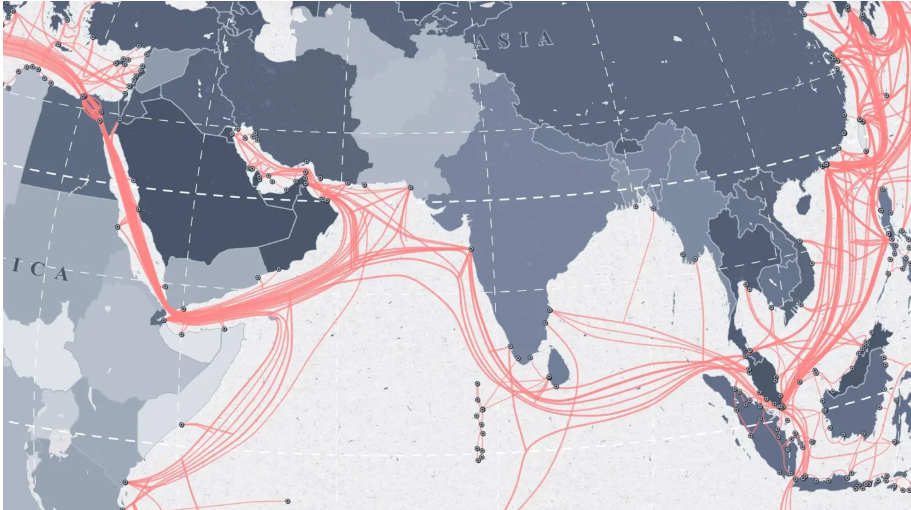
COLOMBO, Sri Lanka — Protecting undersea cables and other critical maritime infrastructure emerged as a key focus of the Sixth Bay of Bengal Maritime Dialogue, as regional officials and experts examined practical ways to strengthen cooperation in the strategically important waters.
The two-day meeting at the Cinnamon Grand Colombo brought together senior officials, maritime practitioners, researchers and diplomats to discuss infrastructure security, crisis response, fisheries governance and shared marine resources.
It was co-hosted by Sri Lanka’s Pathfinder Foundation and the Switzerland-based Centre for Humanitarian Dialogue.
Protecting undersea cables and responding to incidents
Participants discussed how regional actors could improve coordination to protect subsea cables and other critical infrastructure, strengthen responses to incidents at sea and build trust between institutions.
The discussions placed infrastructure security within the wider strategic context of the Bay of Bengal and the Indo-Pacific, alongside maritime communications, geopolitical competition and the management of shared maritime spaces.
The meeting emphasised that challenges crossing national boundaries require sustained cooperation among countries bordering the bay.
Moving regional cooperation from policy to action
A central session, titled “From Adoption to Action,” examined how recommendations developed during the previous five dialogues could be translated into practical outcomes.
Participants joined three breakout discussions covering maritime security, inclusion, and data and science diplomacy. The meeting also explored confidence-building measures and ways to improve coordination among regional institutions.
Opening speakers included Pathfinder Foundation Chairman Bernard Goonetilleke and the Centre for Humanitarian Dialogue’s Senior Adviser for South Asia, Venu Rajamony.
BIMSTEC Secretary General Indra Mani Pandey delivered a plenary address. Indonesia’s Vice Minister for Foreign Affairs, Arief Havas Oegroseno, contributed a recorded keynote address, while Germany’s Ambassador to Sri Lanka and the Maldives, Felix Neumann, delivered a special address.
Pathfinder Foundation founder Milinda Moragoda also attended the opening session.
Illegal fishing and shared resources
The second day focused on sustainable fisheries governance, including regional efforts to prevent, deter and eliminate illegal, unreported and unregulated fishing.
Discussions covered the management of shared fish stocks, better use of evidence and data, reducing cross-border tensions, and protecting the livelihoods and welfare of fishing communities.
Australia’s Special Envoy for Indian Ocean Affairs, Tim Watts, contributed a recorded message.
The dialogue’s outcomes will be shared with regional organisations and the governments of countries bordering the Bay of Bengal.
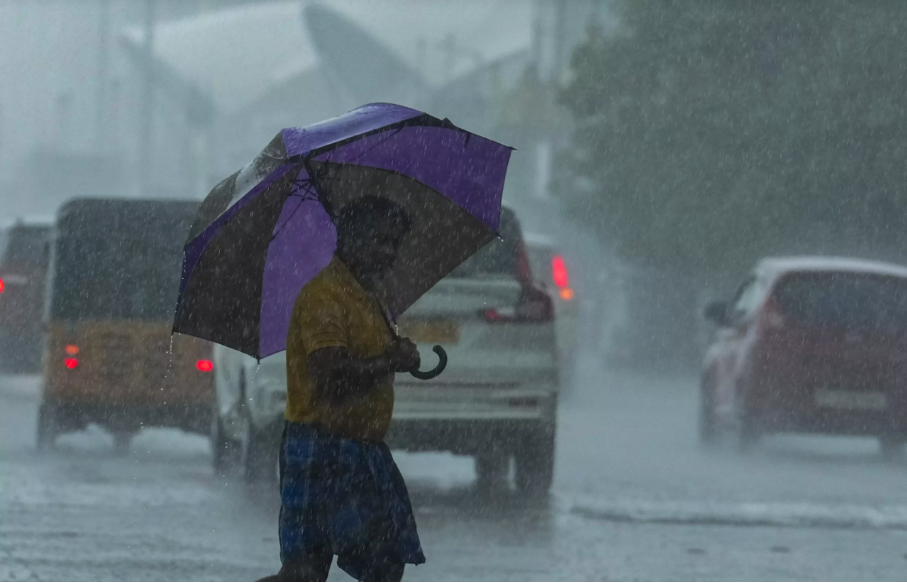
COLOMBO, November 11, 2026 — Sri Lanka’s weather forecast for November 11 predicts heavy rainfall exceeding 100 millimetres at some locations in Western, Sabaragamuwa, Central, Southern and Uva provinces. People are urged to take precautions against lightning and temporary strong winds during thunderstorms.
Showers or thundershowers will occur at times in Northern Province and the northeastern district of Trincomalee. Elsewhere across the island, showers or thunderstorms are expected after 1 p.m.
Where is heavy rain expected in Sri Lanka?
Rainfall above 100 mm is likely at some places in these five provinces:
- Western Province, which includes Colombo.
- Sabaragamuwa Province.
- Central Province.
- Southern Province.
- Uva Province.
Early-morning mist is also expected at some locations in Western, Sabaragamuwa, Central and Uva provinces, and in Galle, Matara and Kurunegala districts.
Lightning and strong winds: What precautions should people take?
Residents and visitors should stop paddy farming, plantation work, outdoor sports and construction when thunderstorms approach.
People outdoors should seek shelter in a substantial building or an enclosed, hard-topped vehicle. They should avoid sheltering under trees or in open huts, tents and bus shelters.
Open fields, hilltops, beaches, rivers, reservoirs and other water bodies should also be avoided during thunderstorms. The safety advice urges people to avoid bathing, using wired telephones and handling electrical appliances while thunder is occurring.
Advice for fishermen and travellers
Fishermen and small-boat operators are advised not to venture out to sea and to return to shore early when storms approach.
Travellers should avoid flooded roads and take precautions on tree-lined roads during strong winds.
Residents should follow flood and landslide warnings, protect livestock, crops and property, and be ready to move to a safe shelter if advised.

This paragraph serves as an introduction to your blog post. Begin by discussing the primary theme or topic that you plan to cover, ensuring it captures the reader’s interest from the very first sentence. Share a brief overview that highlights why this topic is important and how it can provide value. Use this space to set the tone for the rest of the article, preparing readers for the journey ahead. Keep your language approachable, yet informative, to create a strong connection.
Sometimes, the simplest moments hold the deepest wisdom. Let your thoughts settle, and clarity will find you. Use this quote space to share something inspirational or reflective, perfectly aligned with the theme of your article.
This paragraph dives deeper into the topic introduced earlier, expanding on the main idea with examples, analysis, or additional context. Use this section to elaborate on specific points, ensuring that each sentence builds on the last to maintain a cohesive flow. You can include data, anecdotes, or expert opinions to reinforce your claims. Keep your language concise but descriptive enough to keep readers engaged. This is where the substance of your article begins to take shape.


As you move toward the midpoint of the article, this paragraph provides an opportunity to connect earlier ideas with new insights. Use this space to present alternative perspectives or address potential questions readers might have. Strike a balance between depth and readability, ensuring the information remains digestible. This section can also serve as a transition to the closing points, maintaining momentum as you steer the discussion to its final stages.
Wrapping Up with Key Insights
In this concluding paragraph, summarize the key takeaways from your article, reinforcing the most important ideas discussed. Encourage readers to reflect on the insights shared, or offer actionable advice they can apply in their own lives. This is your chance to leave a lasting impression, so make sure your closing thoughts are impactful and memorable. A strong conclusion not only ties the article together but also inspires readers to engage further.
Welcome to WordPress. This is your first post. Edit or delete it, then start writing!

This paragraph serves as an introduction to your blog post. Begin by discussing the primary theme or topic that you plan to cover, ensuring it captures the reader’s interest from the very first sentence. Share a brief overview that highlights why this topic is important and how it can provide value. Use this space to set the tone for the rest of the article, preparing readers for the journey ahead. Keep your language approachable, yet informative, to create a strong connection.
Sometimes, the simplest moments hold the deepest wisdom. Let your thoughts settle, and clarity will find you. Use this quote space to share something inspirational or reflective, perfectly aligned with the theme of your article.
This paragraph dives deeper into the topic introduced earlier, expanding on the main idea with examples, analysis, or additional context. Use this section to elaborate on specific points, ensuring that each sentence builds on the last to maintain a cohesive flow. You can include data, anecdotes, or expert opinions to reinforce your claims. Keep your language concise but descriptive enough to keep readers engaged. This is where the substance of your article begins to take shape.
As you move toward the midpoint of the article, this paragraph provides an opportunity to connect earlier ideas with new insights. Use this space to present alternative perspectives or address potential questions readers might have. Strike a balance between depth and readability, ensuring the information remains digestible. This section can also serve as a transition to the closing points, maintaining momentum as you steer the discussion to its final stages.
Wrapping Up with Key Insights
In this concluding paragraph, summarize the key takeaways from your article, reinforcing the most important ideas discussed. Encourage readers to reflect on the insights shared, or offer actionable advice they can apply in their own lives. This is your chance to leave a lasting impression, so make sure your closing thoughts are impactful and memorable. A strong conclusion not only ties the article together but also inspires readers to engage further.